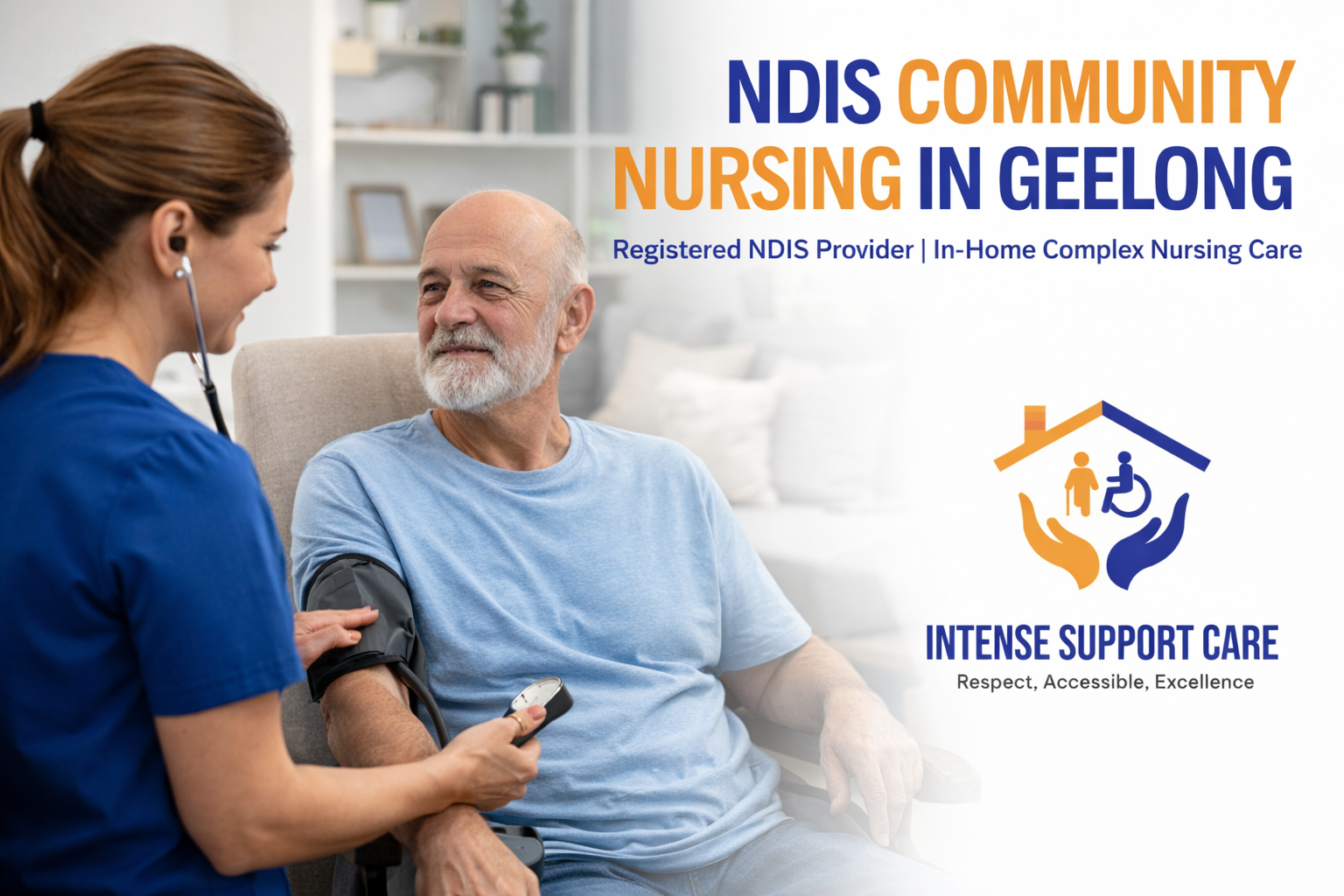
What is NDIS Community Nursing?
NDIS Community Nursing Services provide clinical and medical support to participants with complex health conditions.
These services are delivered by qualified Registered Nurses (RNs) and Enrolled Nurses (ENs) and may be funded under:
- Core Supports
- Capacity Building Supports
💙 Our Community Nursing Services in Geelong
At Intense Support Care – Geelong NDIS Provider, we offer:
🩺 Clinical & Complex Care
✔ Complex wound care management
✔ Catheter care and continence support
✔ PEG feeding and enteral nutrition
✔ Tracheostomy care (if required)
💊 Medication & Health Management
✔ Medication administration
✔ Diabetes management
✔ Chronic disease monitoring
✔ Vital signs and health assessments
🏡 In-Home Nursing Support
✔ Post-hospital care and recovery
✔ Palliative and ongoing care support
✔ Pressure injury prevention
✔ Infection control and hygiene care
📍 Areas We Service in Geelong & Surroundings
We proudly provide NDIS community nursing services across Geelong, including:
- Norlane
- Corio
- Belmont
- Newcomb
- Grovedale
- Waurn Ponds
- Armstrong Creek
- Lara
- Werribee & surrounding Melbourne regions
⭐ Why Choose Intense Support Care Geelong?
✅ Registered NDIS Provider in Geelong
Fully compliant with NDIS Quality & Safeguards Commission standards
✅ Experienced Nursing Team
Our team includes Registered Nurses, Enrolled Nurses, and skilled support workers
✅ Fast Service Start (Immediate Capacity)
We can commence services quickly across Geelong and regional Victoria
✅ Person-Centred & Flexible Care
We tailor supports based on:
- Participant goals
- Medical needs
- Cultural preferences
✅ Collaboration with Your Team
We work closely with:
- Support Coordinators
- Plan Managers
- Allied Health Professionals
🌏 Benefits of Community Nursing at Home
Choosing in-home nursing care in Geelong helps participants:
✔ Stay independent in their own home
✔ Reduce hospital admissions
✔ Improve long-term health outcomes
✔ Receive personalised, one-on-one care
👨⚕️ Who Needs Community Nursing?
You may benefit if you:
- Have high-intensity or complex medical needs
- Require ongoing clinical care at home
- Are transitioning from hospital to home
- Need medication or health monitoring support
📞 Contact the Best NDIS Provider in Geelong
Start your care with a trusted NDIS community nursing provider near you.
📞 1300 161 403 / 03 4232 3170
📧 info@intensesupportcare.com.au
🌐 www.intensesupportcare.com.au